

Mailbag for May 22, 2026
Bruce Dern is a good gossip, Timothée Chalamet's upcoming projects, the death of the film festival (?), Jacob Elordi will be fine, where is Awkwafina and race in Hollywood, and more...

Dear Squawkers,
Bruce Dern was celebrated in Cannes this week, and walked the carpet with his daughter, Laura, and her two kids Jaya and Ellery. Bruce is at the festival to promote the documentary Dernsie: The Amazing Life of Bruce Dern, directed by Mike Mendez. Dernsie is not his nickname. A “dernsie” is one of his signature moves, an improvised line or gesture that often happens when he’s on set that turns a scene that’s lacking something into…well…cinema. Jack Nicholson is the person credited with coming up with the expression.
Bruce is a storyteller. Considering he’s worked with almost everyone, for over five decades, and especially Hollywood in the 60s and 70s, of course he has “a crazy story about everybody”, which is how he’s described in the documentary.
The story that’s making headlines today is actually a story he’s told before, at least once publicly. I read about it the first time in 2021, when he was interviewed by Hadley Freeman for The Guardian. Here’s how he told the story at the time:
“Did you ever see Once Upon a Time in Hollywood? Do you remember when Brad Pitt comes in and tries to wake me up?” he asks.
You mean when Pitt (playing the fictional stuntman Cliff Booth) visits your character (a fictionalised version of the real-life George Spahn, who owned the ranch where the Manson family set up camp)?
“Right, right. So I wake up eventually and start talking. But Brad laughs, which he’s not supposed to do, and Quentin [Tarantino] yells: ‘Cut!’ and says to Brad: ‘What are you doing?’ Brad says: ‘He’s not sticking to the script!’ And Quentin says: ‘Brad, that’s why he’s here. No one can write the shit that comes out of his mouth.’”
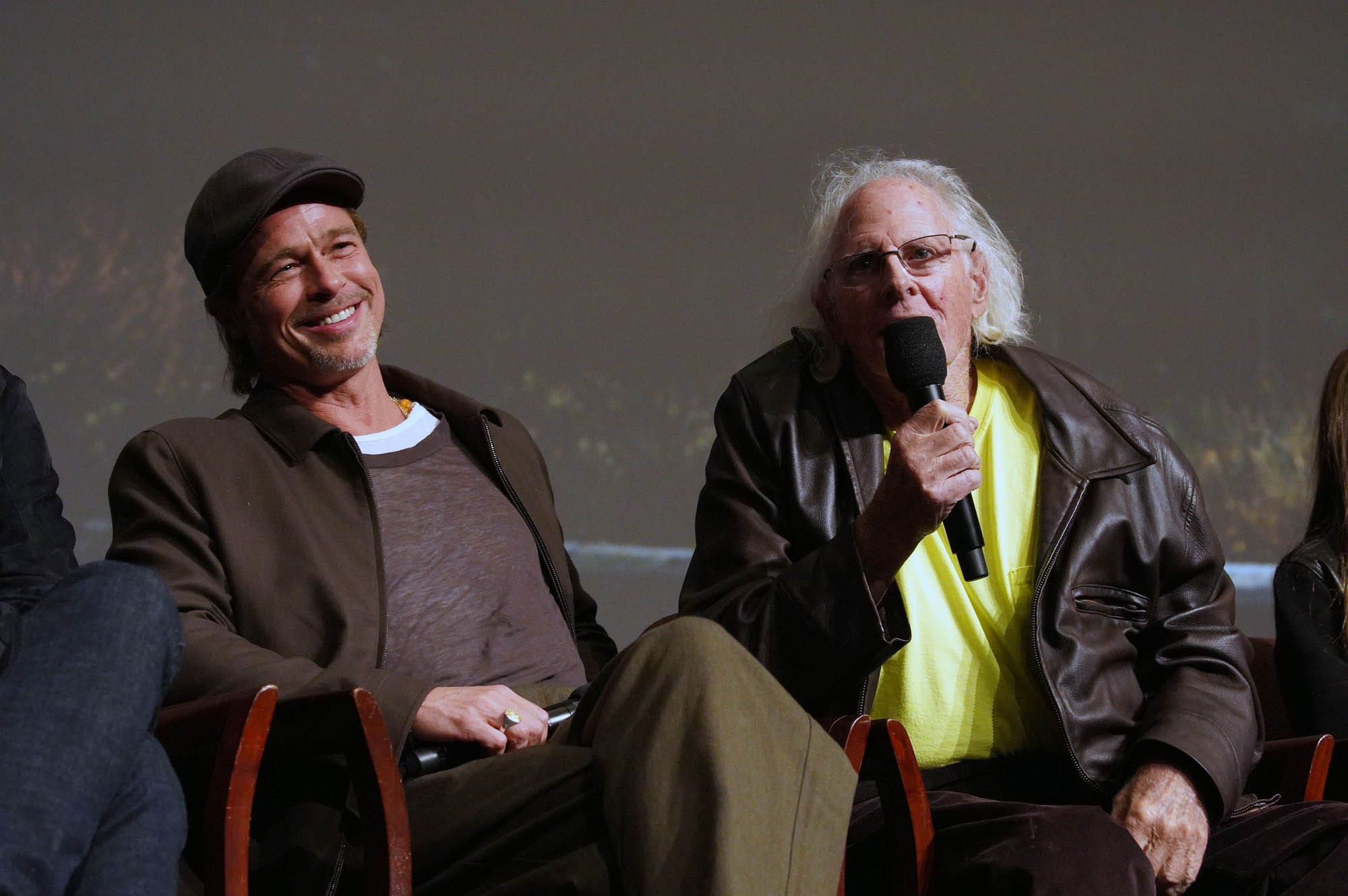
So the basic details are that on the set of Once Upon a Time…in Hollywood, during the scene between Bruce and Brad Pitt, Bruce starts improvising and Brad breaks character and Quentin Tarantino is like, why did you stop, you have to keep going.
Five years later, this same story has become a PEOPLE.com “exclusive” but Bruce has put a little more sauce on it.
“When Brad Pitt wakes me up in Once Upon a Time...in Hollywood, I’m in the bed and I get up and I’m a little groggy and stuff and I just say, ‘I’m not really sure what’s going on,’” Dern described of the improvised moment. “I’m looking at him. [Pitt] cut the camera. He cut the camera. The look on Quentin’s face — I mean, he was insanely grave — and he said, ‘Brad, what did you just do?’”
Dern continued, “He said, ‘Well, I cut the camera.’ He said, ‘Never again in your life will you ever cut a camera, or you’ll be dead in this business. That’s my domain. Don’t stop behavior.’ So then we went on and did the scene, and all Brad did was say to him, ‘Well, that wasn’t in the script what he said.’”
PEOPLE.com turned it into a headline about Brad Pitt getting a “scolding”…which I’m not mad about. Bruce can tell his story however he wants to, the facts here remain the same. He’s Bruce Dern, he’s infamous for his “dernsies”, and he dropped a “dernsie” on his scene partner, a famous movie star for 30 years, who wasn’t ready for it.
Bruce Dern has exactly one scene in Once Upon a Time…in Hollywood. Maybe in the original script he might have one or two more, max, but it’s obvious in context that the character was never meant for all that much screen time. That would have been the whole point of casting Bruce Dern (who stepped in for Burt Reynolds) – for maximum creepy impact. The dernsie was only ever going to happen in a very limited period of time in a fixed setting. Whether or not Quentin actually “scolded” Brad or if this has become embellished by Bruce doesn’t change the fact that the dersnie caught him off-guard. And now this anecdote is blowing up online because “Brad Pitt getting scolded by Quentin Tarantino – source: Bruce Dern” is just too tantalising.
So what have we learned here? That Bruce Dern is really good at gossip. Gossip, after all, is storytelling – and everyone already knew that Bruce has some great stories. What we may not have appreciated is that like all great storytellers, he keeps workshopping. This man is out here selling his Brad Pitt story like it’s a line from a script, changing up the delivery and the pacing whenever he gets the chance so that the next time it might land even harder. And this time it landed, with maximum impact, at Brad Pitt’s expense. Brad won an Oscar for his performance in a film in which he couldn’t keep up with Bruce Dern. Let that be the takeaway.
To the mailbag…
Question from Jen Ar:
I was going to ask about Lainey’s comment on the site today, that it’s not like Timmy is working less since being with Kylie. His “Upcoming” section of IMDB is looking pretty light - Dune 3 is done, Wonka 2 is in pre-production. Nothing else. Is this the norm for an actor of his popularity and calibre? Is he just being very selective with his next projects? Or has the twenty-something sheen worn off of him a bit? Will the next couple of years decide if he goes takes the Tom career path (he’s open about how much he loves Top Gun) or the Leo career path (who famously advised him against superhero franchises)?
Lainey’s Answer:
This is a good example to use to point out that IMDb is often incorrect and/or incomplete. Because there should be at least two more projects in Timothée Chalamet’s “upcoming” section on his page. And it’s kinda surprising that the more high-profile project isn’t there, considering that it was industry-wide news when it was announced last year.
Timmy plans to reconnect with James Mangold (A Complete Unknown) on a film called High Side about a motocross racer and his troubled brother doing bank heists. The reason this was a bigger news story than the usual film announcement is that there was a bidding war over the project, won by Paramount, and the first deal made by new studio co-chairs Josh Greenstein and Dana Goldberg. They threw money at this. And then they threw even more money at Mangold a month later, signing him to an overall deal. The point is, there are a lot of people who are invested in making High Side happen, it’s a matter of where the script is at.
In April Jaime Oliveira, who came up with story and was working on the script, posted on Instagram that he’d turned in the last draft so now it’s a matter of whether or not it’s in good enough shape to proceed, or if another writer comes in for a polish, or major surgery, or if they start over altogether with another writer. All of these are possibilities in Hollywood. But even at this stage, this should be listed in IMDb, and it isn’t, so they’re clearly not on their shit.
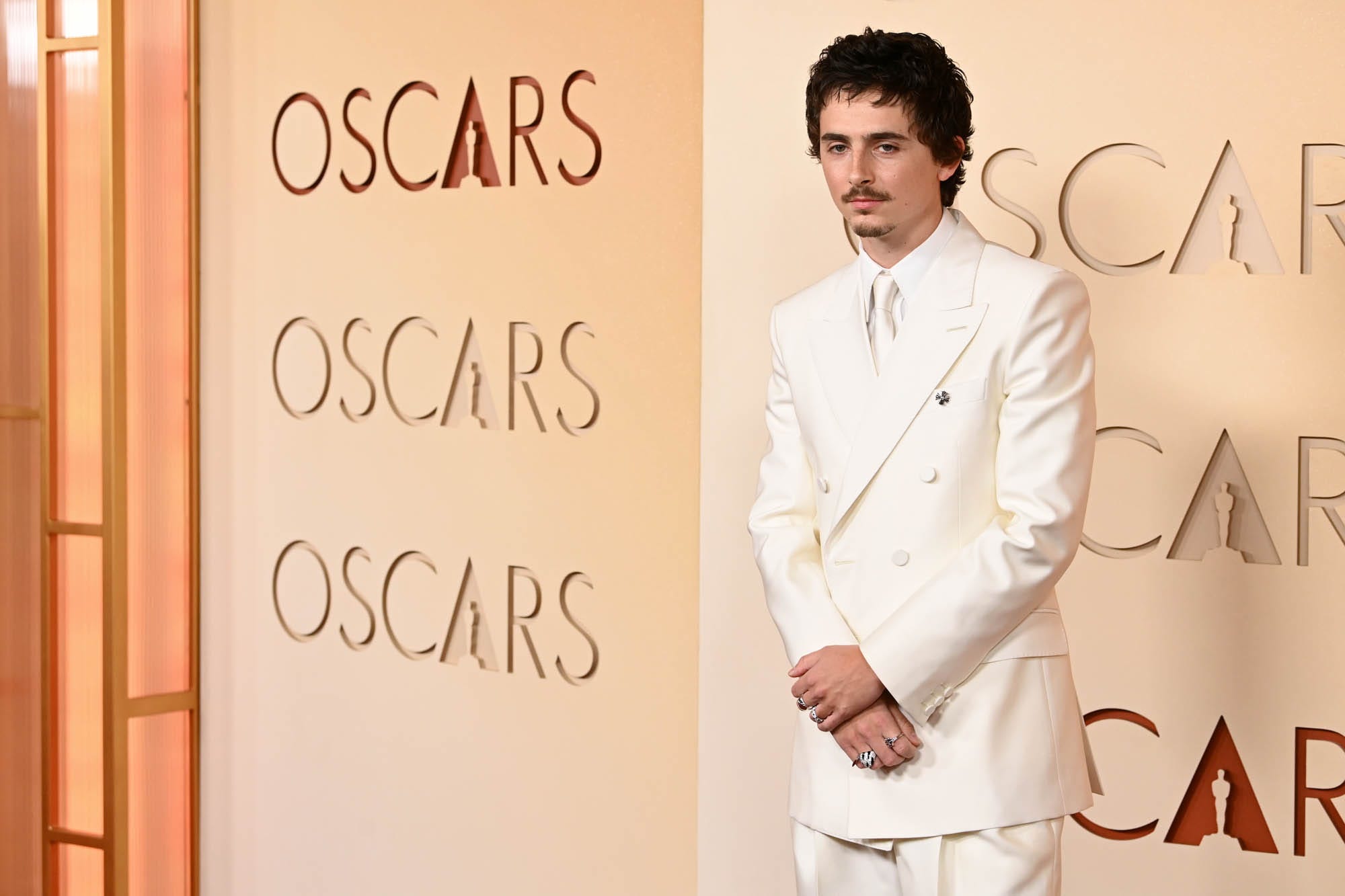
As for Timmy working less – he’s said a few times during award season that he did not expect to be on a film set through 2026, which would be the longest he’s not been on a film set in something like four years because he went from Wonka pretty much straight into Dune 2; then the strikes stalled everything but he was in character prep for Bob Dylan, and he went straight into Marty Supreme from that film and then spent last year doing Dune 3.
Even without the backlash then, it would have been expected for him to take an extended break for a creative recharge and reset. And this is not unusual for an actor of his status. As for whether he’s being selective, and what path he’ll go on, Tom or Leo…
Dune might not be like an MCU superhero but it’s definitely a franchise. He definitely sees it as a franchise, and you could make the argument that the “hero” franchise he’s attached to is on a whole other level of subversion, considering where Paul Atreides started, with all that hype, and where he’s looking to be headed. In that sense, if I were a vain ego-stroking Timothée Chalamet writing my own career recap in 20 years, there’s a case to be made about his hero’s journey becoming a hero’s unravelling, linking his work from Dylan to Marty to Paul as the villain block of his oeuvre, following the softer performances that characterised his earlier work that was, now that I think about it, bookended by Wonka.
Going back to High Side, Deadline described the film as “Heat meets Hell or High Water, mixed in with one of those Bruce Springsteen songs about tragic brother relationship”. Those are two aggressively ambitious comps. Who’s the De Niro to Timmy’s Pacino, or vice versa? Who’s the Ben Foster to his Chris Pine? Or vice versa? Maybe it’s the Springsteen reference in the Deadline quote but I’d be interested in a Timmy vs Jeremy Allen White tragic brother situation, with JAW in the reverse role from what he’s done in The Bear. And Timmy also gets to ride motorcycles while working his thespian bone. Maybe that’s his Tom to Leo middle ground.
Question from Margaret:
Question for Sarah: Barry Hertz in the Globe and Mail wrote a fascinating article about the death of film festivals. He explains that studios no longer want the risk and expense of premiering at a festival. I was surprised to read that One Battle After Another did not make any festival appearances. We’ve seen what feels like a dip at TIFF which seems to get scooped by Venice. It seems to get harder and harder to get a world premiere. Thoughts on this Sarah?
Sarah’s answer:
For reference, here is the article Margaret is referring to. In the first paragraph, Hertz says: “Two weeks ago in Las Vegas, I witnessed the death of the film festival as we know it. Okay, that’s a mouthful of supersized hyperbole…”
So, he admits the premise itself is hyperbolic. But it’s not untrue that this year, Hollywood studios entered no films into competition at Cannes and yet CinemaCon remains a huge industry event. But they’re also not really comparable. CinemaCon has more in common with Comic-Con than it does a film festival like Cannes or Sundance or TIFF. CinemaCon is a marketing exercise about generating hype and convincing movie theater owners/managers to book films. Film festivals exist to 1) connect audiences with new films and emerging talent, and 2) sell independently made films to distributors.
The kind of movies that benefit from festivals tend to be smaller, independently financed, and/or weird. One Battle After Another, coming from an admired filmmaker and starring Leonardo DiCaprio, felt like a film that didn’t need a festival push. And in tone, it plays more like an action comedy than a “festival film”, so that calculation wasn’t entirely wrong. (The calculation that was wrong was Leonardo DiCaprio’s audience appeal, which might be waning.)
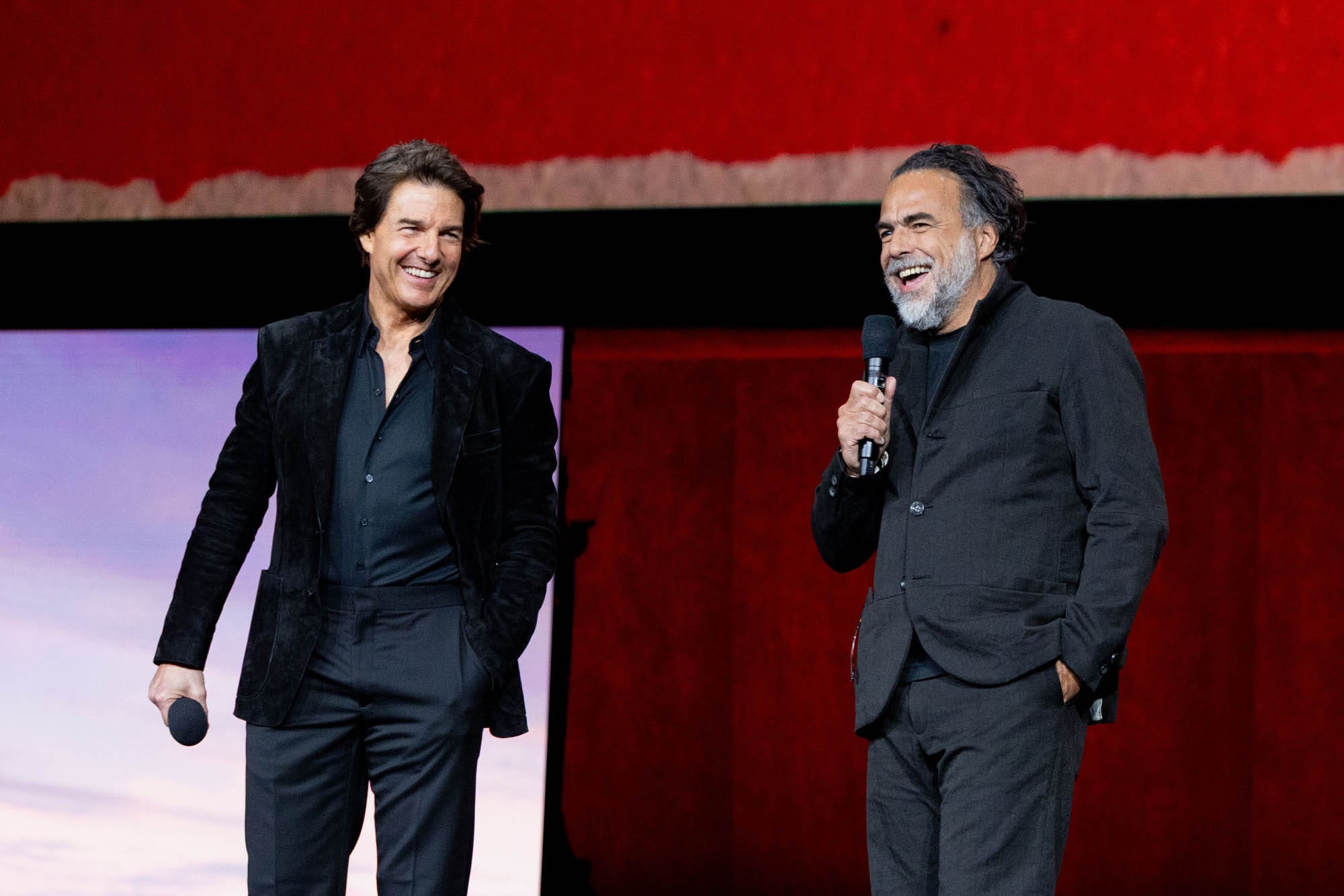
I do think there is a kind of fear-based math happening amongst studios right now, where they are spooked by fickle audiences and wary of big spending on movies that look even a little bit risky. Digger, for instance, uniting Tom Cruise and Alejandro Iñárritu, is apparently weird and high concept, and is reportedly going to skip the fall festivals before its October release. I do think executives are afraid of bad reviews/word of mouth from festivals ruining a film’s chances before opening weekend.
But I’ve been hearing this as long as I have been writing about movies on the internet. They’re always afraid of bad reviews, but they’ll stick that “certified fresh” ribbon on an ad faster than you can say “rotten tomato”, and they never talk about the movies that BENEFIT from festivals. In 2024, Mubi built a successful guerilla marketing campaign for The Substance from its inclusion in TIFF’s “Midnight Madness” programming. It’s a kind of selective blindness; they’ll talk about how bad reviews hurt a movie but never mention how good reviews HELP.
I’ve done this long enough to say: reviews don’t matter. If an audience WANTS to see a film, they will see it no matter what any critic says. Similarly, if a movie looks bad and/or dumb, they’ll stay away. It’s a marketing problem, and film festivals are not the enemy or at fault, but we have a class of executives with little to no background in film who are facing a marketing problem and treat it like a budgeting problem. Speaking of: sending films to CinemaCon is also hugely expensive. It’s just that at CinemaCon, everyone claps on command.
Question from Caitlin:
I was also going to ask a Jacob Elordi question but from a different angle: With Jacob Elordi skipping Cannes and then appearing on a beach with Kendall Jenner, do you think this will have any impact on future career opportunities? Will studios see him as unreliable and unserious, particularly about promoting projects, or is he already prestigious enough and a known quantity, so studios and execs won’t care about Cannes, particularly during a year when there isn’t much of an American presence? (I know he’s Australian, but the studios and execs tend to be, so maybe they will write this year off.)
Lainey’s Answer:
No impact whatsoever. Studios will not see him as unreliable and unserious because he is an attractive white man who is ostensibly talented. If he were a woman? Please. Imagine if Jennifer Lopez dropped out of Cannes because of an injury and ended up in a bikini on a beach with some young stud? TikTok would set her on fire. Then again, as if JLo would ever let a sore foot hold her back from the Cannes jury. Nobody needs to worry about Jacob Elordi, he will be fine. I know there’s that whole Kardashian-Jenner curse that people talk about but maybe Kendall’s strain of it isn’t as potent because look how Bad Bunny emerged from that relationship.
Question from Cherie:
Hey there! Was re-watching Crazy Rich Asians and I started to wonder about Awkwafina and her career so far. I know she’s not idle, but I feel she should be a bigger thing than she is?
Sarah’s answer:
Counterpoint: Awkwafina is fine where she is. She is not “not idle”, she is actively booked and busy. Not idle is like…Lily Collins. She has Emily in Paris, pops up in a movie you’ve probably never heard of every couple years or so, and that’s kind of it. No shade, she’s not idle, but it’s not overwhelming work, is it?
Awkwafina, on the other hand, has two major live-action movies out this year (The Man with the Bag and the next Jumanji movie), she’s voicing a character in Wildwood—which looks SPECTACULAR—and next year she is starring in Kaet Might Die, an adaptation of Kaet McAnneny’s memoir Boobs Gone Rogue (about being diagnosed with breast cancer at 27, check your girls, girls!), and Thumb, a comedy starring Milly Alcock and Kate McKinnon. On top of the feature film stuff, she does steady voice-over work and pops up on TV frequently (she was in episodes of Poker Face, Marvel Zombies, and Black Mirror last year alone).
Awkwafina is routinely doing high-profile work. Could she bank more starring roles? Maybe, but there’s a pretty good explanation for why she doesn’t get more leading lady parts, and it’s the same reason Constance Wu and Gemma Chan aren’t constantly headlining projects, either. I guess today is the day to just constantly be saying it point blank: it’s about race.
Things are better now than they were 20 years ago for women of color in Hollywood, but there is still a lack of headlining opportunities for women of East Asian descent (and Southeast Asian, and South Asian, Simone Ashley is experiencing the same thing). Headlining opportunities do exist; they just don’t come as frequently. Gemma Chan is not having Anne Hathaway’s year of a million starring projects, you know? Even Zendaya’s big year is made up of mostly supporting parts.

This is why Crazy Rich Asians was such a big deal, because it promised a franchise that could propel several women into starring roles, but the fact that we never got a sequel because screenwriter Adele Lim wanted to be paid in a way that reflected the success of the first film… Do we even have to say it? Warner Brothers would literally rather not make money than pay a woman of color what she’s worth.
If you see someone you think is talented and should work more, or have better/higher profile work, and you think, Why is she not doing better? The next question is: Is she white? If the answer is “no”, that is your answer. I’m sorry if that makes anyone feel some kind of way, but it IS about race. In a vacuum, we are talking about talented, charismatic, beautiful women who should not be struggling to book leading lady parts, but they DO. And there is only one thing all these women have in common, and it is being non-white.
We have backslid on the teeny tiny gains made in the 2010s, so actors like Awkwafina (and Gemma Chan, Constance Wu, Simone Ashley, Lupita Nyong’o, even Zendaya, who is so careful about choosing her starring roles because she knows she cannot afford to fail even once) now have to climb back out of the hole they barely peeked over last decade. This is a fair question, Cherie, but I’ve had a lot of stupid emails about The Odyssey in the last couple weeks, and more than anything, I think I’m just frustrated that we can’t even pretend race is a factor here.
Hollywood is hard for everyone, sure, but Awkwafina is working in a system built to disadvantage her more than some others, and she still manages to book a lot of high-profile work, even if it is mostly in supporting roles. Here’s hoping Kaet Might Die is a big success and helps her get more starring roles going forward.
Question from Alice:
I think you addressed this a little with a recent BTS post, but maybe it was projected earnings for the tour, so apologies if a little repetitive. The post about ZLH fever made me (hat tip to Nicole and employeeofmantu for the inspiration as well) wonder what percentage of their earnings (endorsements and otherwise) celebs in an “idol” talent system take home compared to Western celebs? So much of the idol system in less restrictive countries is still enigmatic, and I’m sure China is equally reticent about it, but I know they can be pretty reactive about to the perceived image of their entertainers who enter international awareness. *I’m just using ZLH as my jumping off point, I don’t know his personal situation in regard to management*
Lainey’s Answer:
Financials are hard to pin down in the Chinese entertainment system but here’s what we do know for sure where actor salaries are concerned – they’re making a lot less now than they were a decade ago from their dramas. Up until 2018, a top tier performer could earn as much as $25 million from one series. But after a string of scandals involving several actors and actresses (Fan Bingbing being the most famous example because it made international headlines but there were others) and tax evasion and double contracts (publicly signing one contract for one salary but secretly signing another for more money but not reporting it – allegedly), the government stepped in and ordered that from that point forward, the combined salaries of all the actors in a drama could not exceed 40% of the total production cost. And the lead actors’ salary could not be more than 70% of the budget set aside for the entire cast. The most, then, that C-drama actors are getting paid now per series is maybe like $6 or 7 million. Which, obviously, is still a lot of money but much less than before. And that’s not the total take-home. It’s either a 60/40 or 70/30 split for those who are under management. So the ones who are self-managed or who have founded their own management companies (Bai Jingting, Yang Zi, Wu Lei just to name a few) are in a much better position.

The salary cap is one of the reasons so many C-drama actors do all those endorsements. Especially since in the East, we don’t squick over celebrities and sponcon the way western audiences react. As I’ve mentioned before, it’s a point of pride for fan armies when their faves are signing new deals.
Here’s something else to consider when engaging with C-dramas, at least in my opinion: the career windows are shorter. This is not to say that there aren’t any stars who can sustain career success through their 40s and 50s…but that, comparatively, it happens less and for fewer people than in the west. Almost all the costume dramas are about 20-year-old generals and/or princes and princesses! There are older actors in those series, sure, but they’re not the leads.
I imagine, then, that actors who have a surge in popularity, like Zhang Linghe at the moment, must feel so much pressure to capitalise on these short years as much as they can.
Taking it away from the money – I just want to say how thrilling it is for me that there is so much interest in East Asian entertainment and that The Squawk has become an English-language place to talk about it!
Thanks so much for supporting our work. Have a great weekend!
Keep squawking and keep gossiping,
Lainey and Sarah
Of course Brad Pitt can't improvise.
A movie with Awkwafina AND Kate McKinnon? I will be dead from laughing so hard.